
A dual-spring mechanism that stores energy and releases it in a sudden, decisive motion
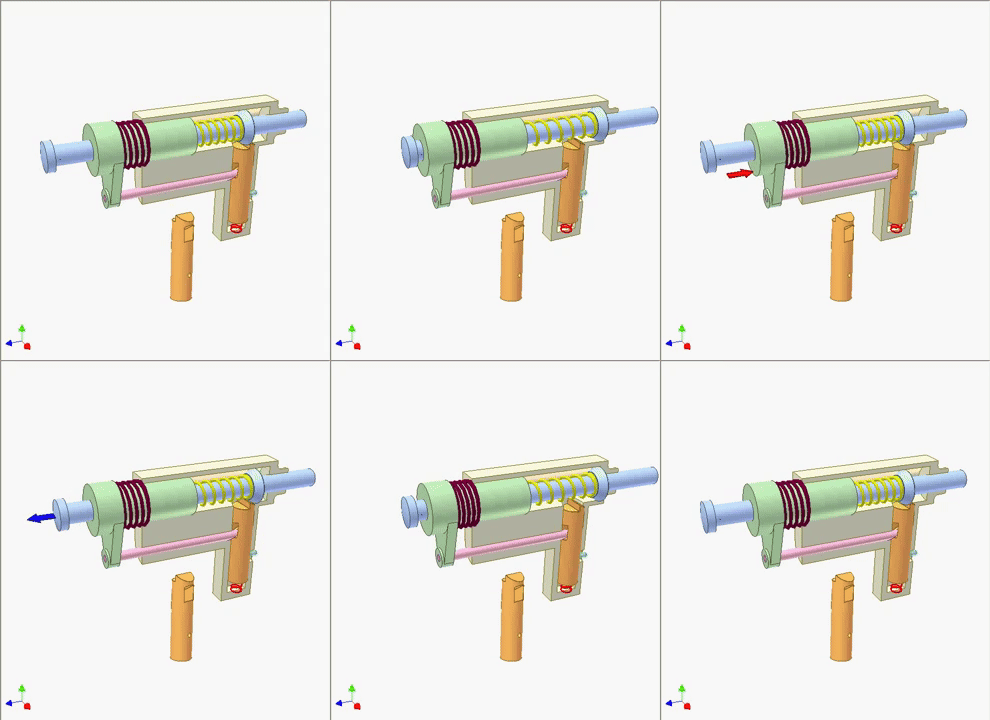
This mechanism uses two springs and a pivoting latch link to create a controlled snap-through action. As the main slide is pushed inward, the compression spring builds force until it overcomes the latch’s pivot geometry. At that tipping point, the slide jumps forward rapidly, converting stored spring energy into a quick, decisive release. Pulling the slide back resets the linkage, letting the cycle repeat with the same crisp snap each time.
Components — The main sliding rod, the red compression spring wrapped around the front section, the yellow return spring in the rear chamber, the pink pivoting latch link, the guiding frame, and the external trigger piece that pushes the slide.
How it works —
- Loading: Pushing the slide compresses the front spring. The latch link restrains the motion and holds the system in a stable but tensioned state.
- Tipping point: Once the spring force crosses the latch’s pivot line, the geometry becomes unstable—the link yields instantly.
- Snap-through: The slide accelerates forward under the spring’s stored energy.
- Reset: Pulling the slide backward re-engages the latch and stretches the rear spring, positioning everything for the next cycle.
The result is a motion that starts smooth but finishes abruptly—ideal when a mechanism must switch states cleanly rather than drift through them.
Applications — Switches and triggers, latch-release devices, automatic feeders, mechanical actuators, and any system needing a fast, reliable transition between two positions.
Why it matters — Snap-action behavior ensures that the device doesn’t “hesitate” in mid-stroke. It either stays put or commits fully, reducing wear, preventing partial engagement, and making every cycle crisp and predictable.
