
A sliding cam and a timed pin create crisp intermittent rotation
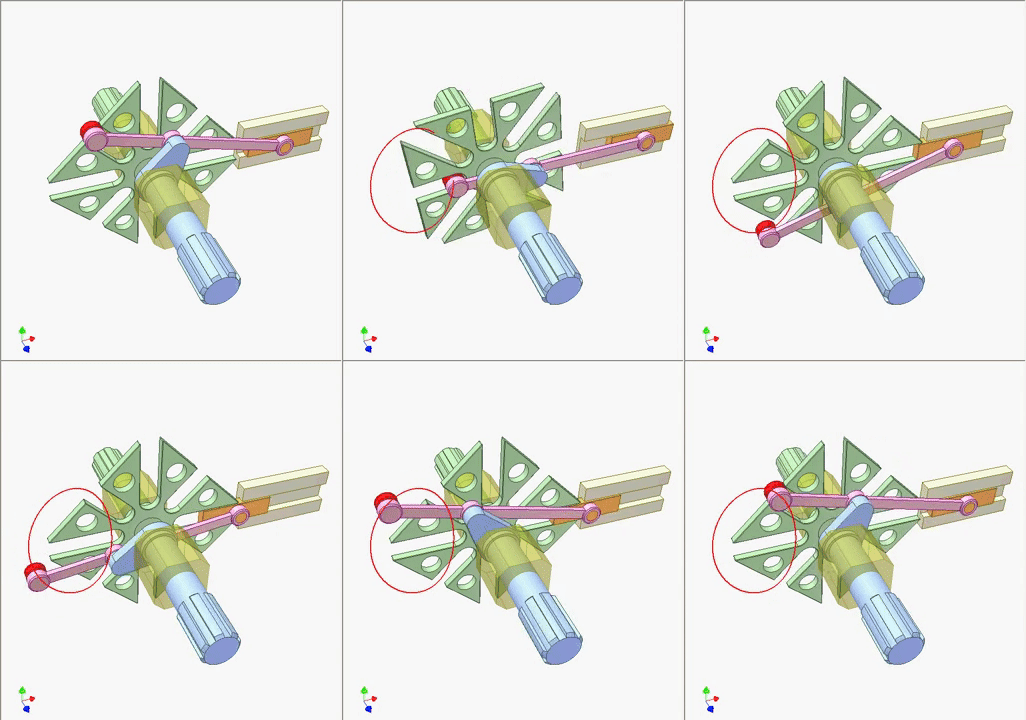
This mechanism uses a rotating cam and a guided sliding block to position a red pin so it slips cleanly into the slots of the green Geneva wheel. Each engagement delivers a precise burst of rotation, followed by a dwell period in which the wheel stays perfectly still.
Components — The blue shaft provides continuous rotation. Mounted to it is a pink cam that drives an orange slider back and forth. At the far end of this slider sits the red pin, aligned so it can enter the radial slots of the green Geneva wheel. The yellow hub at the center supports the Geneva wheel and maintains alignment between all interacting parts.
How it works — The timing comes from the cam-driven slider. As the blue shaft turns, the pink cam pushes the orange block outward, advancing the red pin toward the Geneva wheel. At the exact moment one slot aligns, the pin enters, pushes the wheel through a fixed angle, then retracts as the cam continues to rotate. During the rest of the cycle, the pin stays clear of the wheel, allowing a dwell period in which the wheel remains locked in place by its geometry.
Applications — Pin-guided Geneva drives are used in film projectors, indexing tables, packaging machines, and devices that require precise, periodic motion from a constant-speed input. They are valued for their reliability and crisp positional accuracy.
Why it matters — By separating active drive from dwell with a simple cam-and-slider layout, this design delivers clean, repeatable indexing with minimal parts. The absence of springs makes the motion predictable, stable, and easy to maintain.
