
Two radically different cam grooves driving a rod pattern that yields the same vertical motion
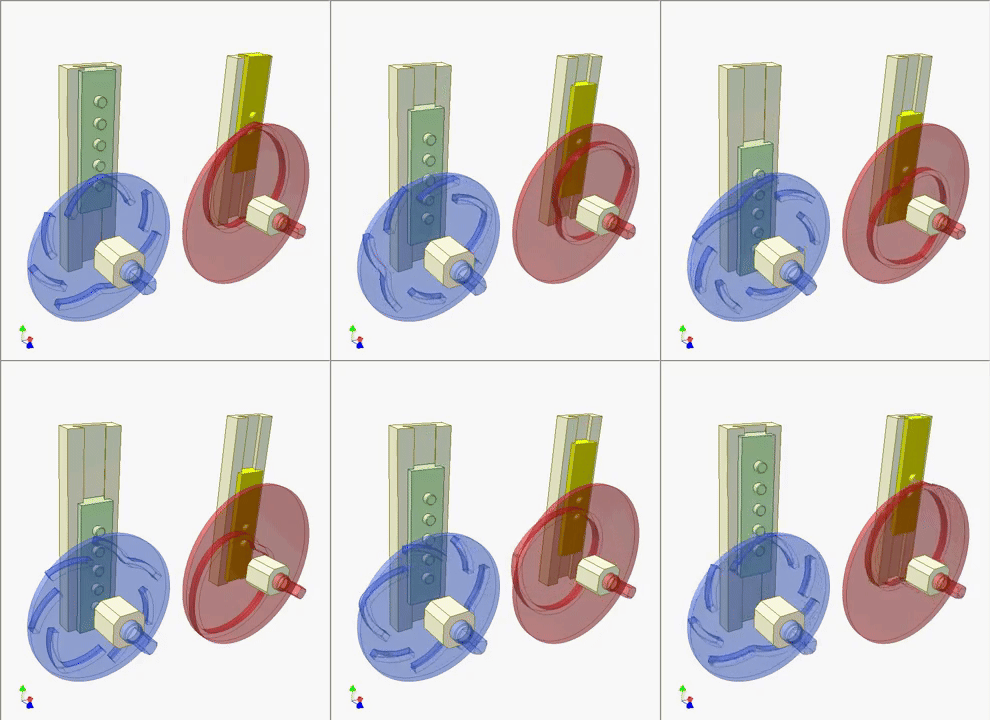
This mechanism illustrates how two very different cam groove geometries can generate the same follower motion, provided each is paired with a matching rod pattern on the slider. Although the blue and red cams have dramatically different internal tracks, their interaction with the corresponding rod shapes forces the rack to follow an identical up-and-down path. It’s a clever comparison that shows how motion design can be reinterpreted—and sometimes simplified—without changing the final behavior of the machine.
Components — The blue cam disk with its smooth, sweeping groove; the red cam disk with its sharply segmented groove; the two rod patterns embedded along the vertical rack; the follower pins; and the shared drive shaft that turns both cams at the same rate.
How it works — Each cam pushes on a differently shaped rod pattern. The blue cam’s gentle groove matches the blue rod’s contour; the red cam’s abrupt groove fits the stepped rod pattern on the opposite slider. Despite these differences, both cam–rod combinations impose the same sequence of vertical displacements on their respective racks. When you compare the sliders side by side, they move in perfect sync—even though the underlying mechanisms bear little resemblance.
Applications — Mechanism teaching models, cam design validation, redesign of legacy machinery, motion replication studies, and comparing alternate kinematic solutions.
Why it matters — It highlights a powerful design truth: a target motion can be achieved through many different mechanical paths. That frees designers to choose whichever cam profile is easier to manufacture, more durable, quieter, or better suited for the space available—without sacrificing the intended movement.
