
A simple pawl that lets the wheel turn forward but never back
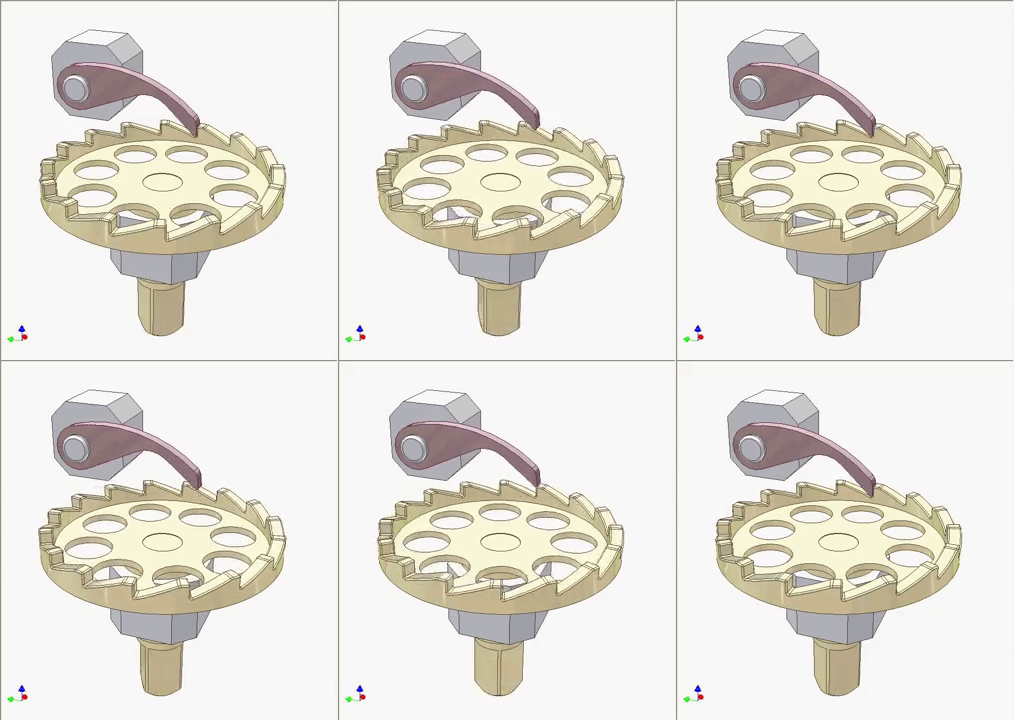
This mechanism is a classic anti reverse ratchet, using a single curved pawl to permit forward rotation while blocking any backward movement. Each tooth of the beige ratchet wheel is shaped to welcome the pawl’s approach in one direction and resist it in the other, creating a clean mechanical check.
Components — The assembly includes a beige ratchet wheel with asymmetric teeth, a purple curved pawl mounted on a small pivot, and a supporting silver block that anchors the pawl. The ratchet wheel has broad windows for lightweight construction and rides on a central shaft.
How it works — As the wheel rotates forward, each tooth lifts the tip of the pawl smoothly and passes beneath it. Gravity or a light bias force drops the pawl back into place immediately after each tooth clears. When the wheel attempts to reverse, the pawl wedges against the steep face of the tooth, preventing backward rotation. This simple geometry ensures reliable one way motion with minimal friction.
Applications — Anti reverse ratchets appear in winches, fishing reels, hoists, hand tools, and safety locks where uncontrolled backward motion could cause damage or injury. Their simplicity makes them suitable for compact, rugged mechanisms.
Why it matters — By allowing motion in only one direction, the ratchet provides control, safety, and predictable mechanical behavior. It prevents back driving without complex gears or electronics, relying instead on straightforward tooth and pawl geometry.
