
A clever wheel arrangement for smooth motion over steps
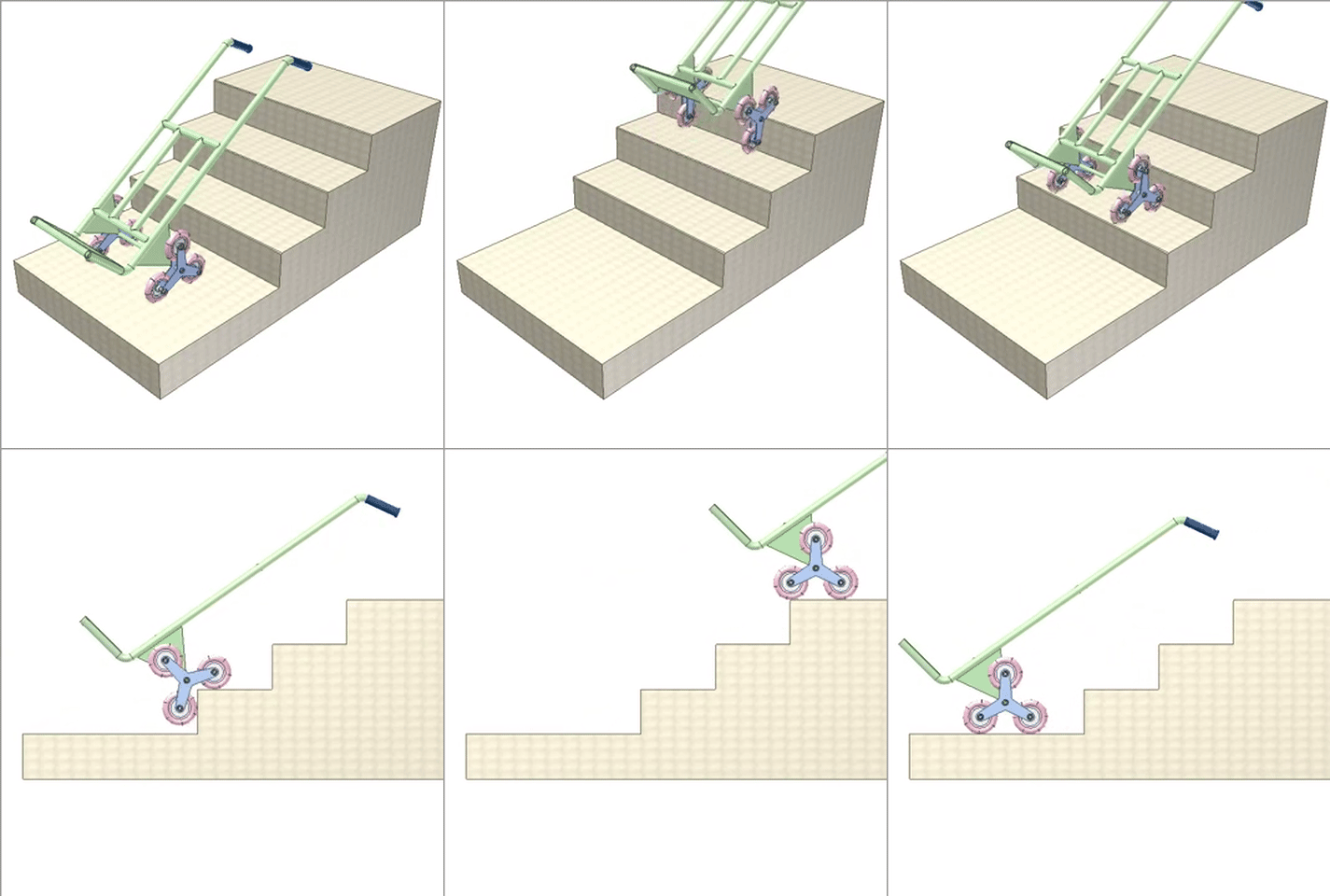
This mechanism uses a tri-wheel rotating assembly to help a frame move smoothly up stair steps. In the animation, each side of the frame carries a three-wheel cluster arranged around a central hub. As the frame is pulled upward, the wheel cluster rotates whenever one wheel reaches the edge of a step, allowing the assembly to “walk” upward without sudden impact.
Components — Visible parts include the triangular wheel clusters on each side (each with three equally spaced wheels), the central rotating hubs, the supporting side frames, and the long pull handles for applying force.
How it works — As the frame is pulled toward the stairs, the lowest wheel contacts the edge of a step. When it can no longer roll forward, the cluster rotates, bringing the next wheel into contact. This rotation shifts the load upward smoothly, letting the mechanism climb one step at a time. The symmetric wheel arrangement ensures continuous support and minimizes shock.
Applications — Common in stair-climbing trolleys, delivery carts, rescue stretchers, and mobility devices.
Why it matters — The rotating tri-wheel geometry allows heavy loads to move upstairs with far less effort and significantly reduced impact compared to a single wheel.