
A simple link that drags one pin at a time to rotate the wheel
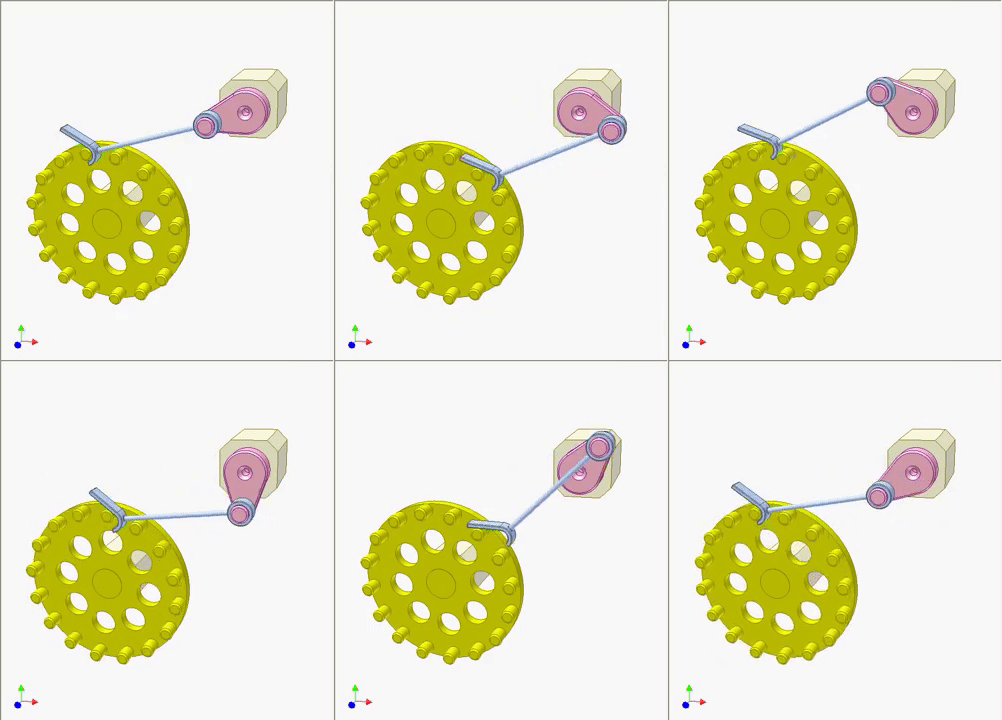
This mechanism uses a single slender linkage to advance a yellow pin gear one step at a time. The pink crank drives the link in a smooth arc, and the link’s angled tip catches one pin on the forward stroke while slipping cleanly past the next pin on the way back.
Components — The system includes a yellow pin gear with evenly spaced pegs, a straight blue link with a shaped driving tip, a pink crank anchored in a white block, and a pivot joint that connects the link to the crank. The geometry ensures the link approaches the pins at a controlled angle.
How it works — As the pink crank rotates, it swings the blue link forward. During this forward sweep, the link’s tip aligns behind one of the pins and pushes the gear ahead by a fixed increment. When the crank continues and reverses the swing, the link flattens its angle relative to the gear, riding over the next pin instead of pulling it backward. This alternating engage and slip motion produces a clean ratchet effect driven by a continuous rotation.
Applications — Single link pin ratchets appear in light duty feeders, small mechanical counters, indexing toys, hand powered tools, and compact step mechanisms where an oscillation must be converted into controlled rotation.
Why it matters — With only one link and no pawls, springs, or extra guides, the mechanism shows how geometry alone can enforce one way motion. It is compact, quiet, and ideal for simple stepwise drives.