
A foot-powered system that turns stepping motion into continuous rotation
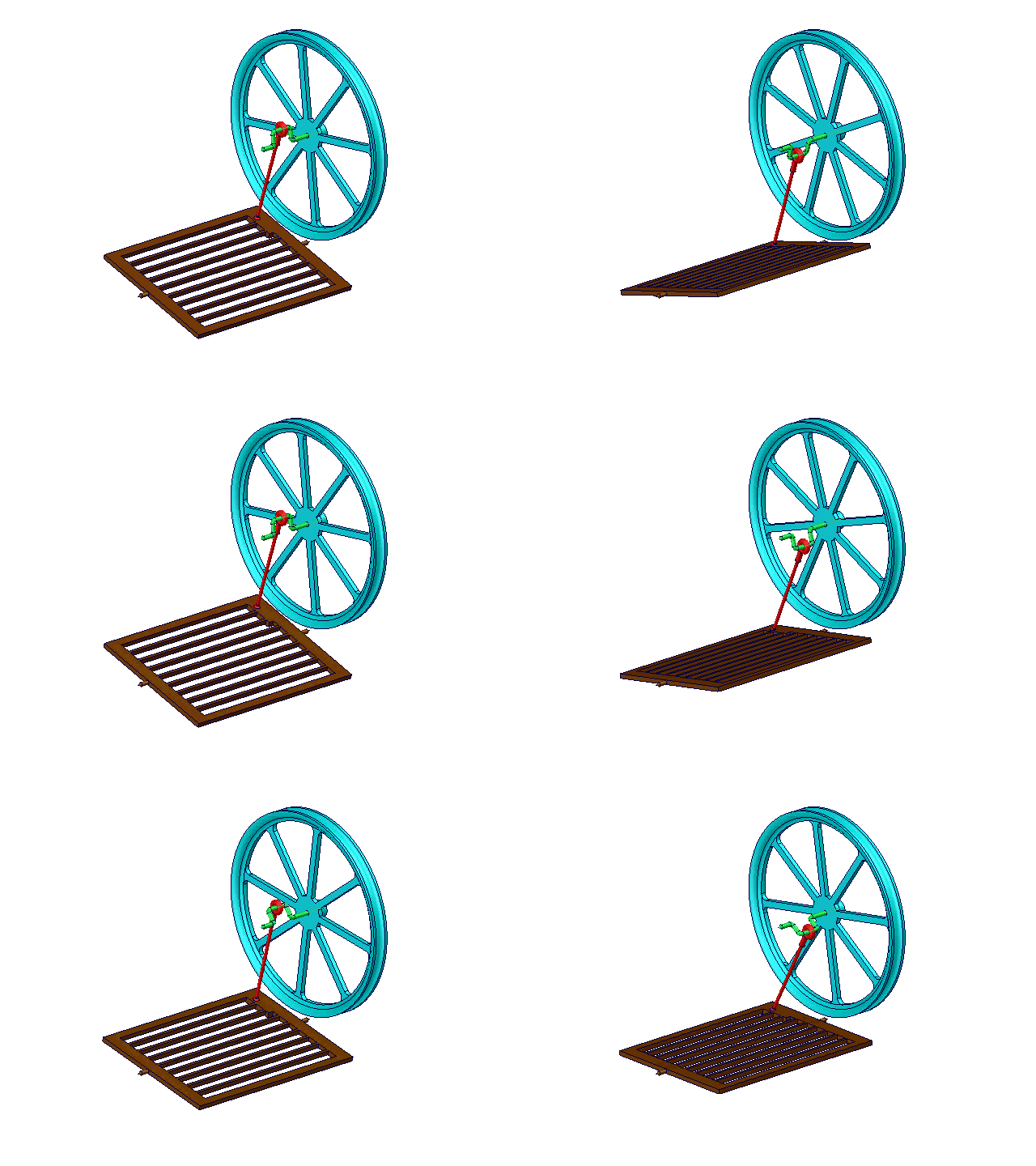
Components —— The animation shows the key parts of a traditional sewing-machine treadle system: a large flywheel (blue), a crank pin on the wheel hub (green), a connecting rod (red), and a hinged treadle or foot plate (brown). The rod links the foot plate to the crank pin, allowing the up-and-down motion of the treadle to drive the wheel.
How it works —— When the operator steps on the treadle, the foot plate moves downward. This downward motion pulls the red rod, which in turn rotates the crank pin on the flywheel. As the flywheel rotates, its momentum helps pull the rod back up, lifting the treadle for the next step.
The animation clearly shows this cycle: the flywheel turns continuously, while the treadle rocks up and down in a smooth rhythm. The crank converts the reciprocating motion of the foot into rotational motion for the sewing machine.
Once the flywheel is spinning, its inertia keeps the motion stable, requiring only gentle stepping to maintain rotation.
Applications —— This treadle mechanism is commonly used in antique and non-electric sewing machines, small workshop tools, and manually powered machinery where electricity is unavailable.
Why it matters —— The treadle system provides a reliable, foot-powered energy source. It allows precise speed control, smooth operation, and independence from electrical power — all achieved through simple, durable mechanics.