
A swinging pendulum drives an anchor that releases the escape wheel tooth by tooth, turning stored energy into precise timing.
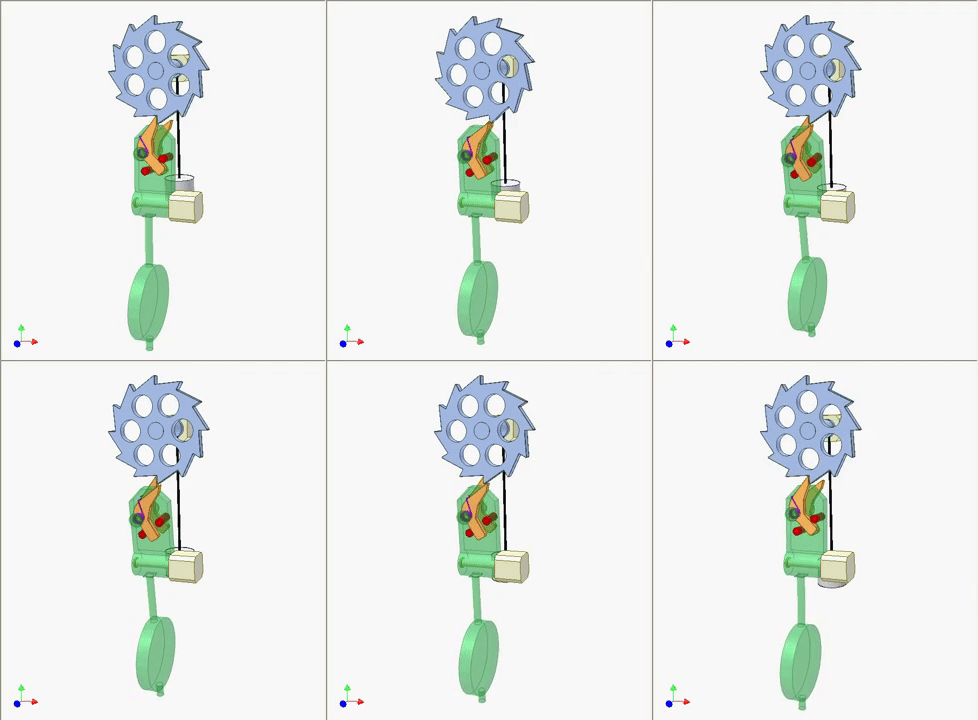
This mechanism is a pendulum-driven anchor escapement, the core regulating element of many classic clocks. The pendulum¡¯s steady oscillation dictates the rhythm, while the anchor¡¯s pallets hold and release the escape wheel in carefully timed increments.
Components — Green pendulum rod and bob, orange anchor with two pallets, blue escape wheel, red locking faces, central pivot, and the driving spring or weight below.
How it works — As the pendulum swings left and right, it rocks the anchor. Each pallet alternately catches and frees a tooth on the escape wheel, allowing only a small rotation per swing. This controlled release maintains a stable cadence and supplies periodic impulses back to the pendulum, keeping it oscillating.
Applications — Pendulum clocks, mechanical timers, metronomes, regulators, and devices requiring precise mechanical stepping.
Why it matters — By tying wheel rotation to pendulum motion, the escapement achieves remarkably stable timing using only geometry and gravity. It balances energy input and resistance in a self-sustaining cycle, forming one of the most elegant control mechanisms ever devised.