
A cam and spring arrangement that lets the lever settle firmly into a balanced middle position.
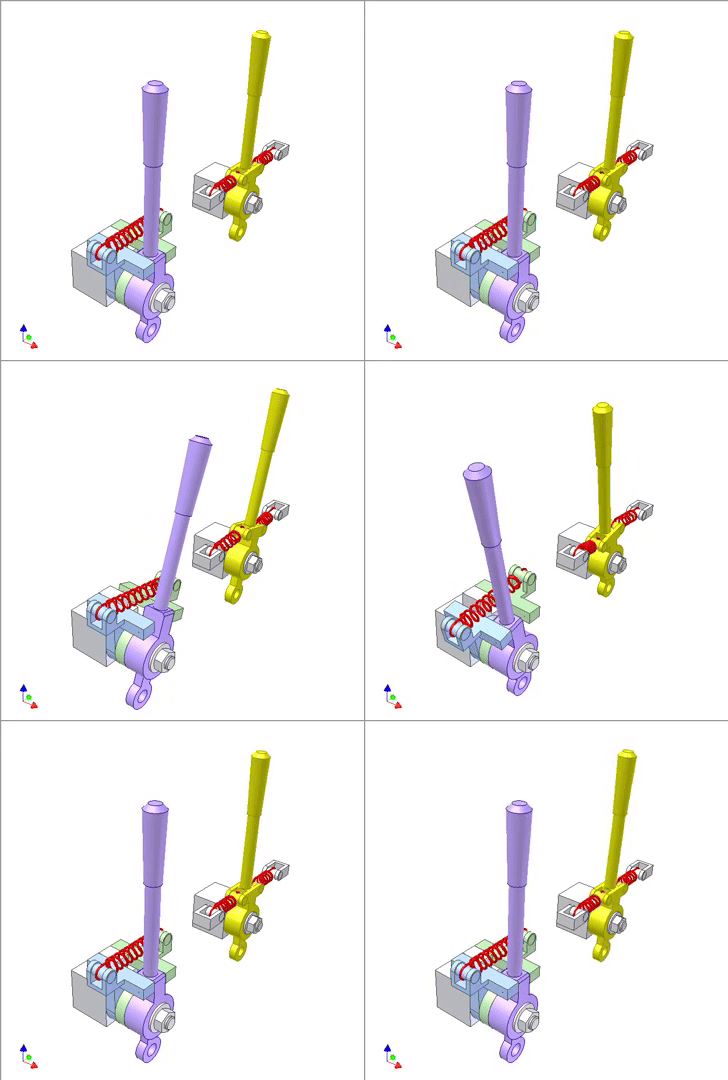
Many levers tend to rest at one end of their travel unless locked or weighted, but this design uses geometry and spring force to create a naturally stable midpoint. With the correct cam profile and preload, the arm snaps gently into center and stays there until deliberately moved.
Components — Lever arm, cam-shaped base, compression spring, sliding guide block, pivot bolts, and the frame holding the spring and guides in alignment.
How it works — The cam on the lever presses against a spring-loaded block. The middle of the cam is shaped as a slight valley, so the spring pushes the lever into this neutral ¡°detent.¡± Tilting the lever lifts it out of the valley, and once released, the spring returns it back to center.
Applications — Control levers with a neutral home position, joystick centering mechanisms, selector switches, machinery handles, and pedals requiring a defined rest state.
Why it matters — A stable neutral position improves control accuracy and prevents accidental activation. By shaping the cam instead of using complex locking parts, the mechanism offers a smooth, predictable feel that operators can sense without looking.