
A cross-axle mechanism that lets a long trailer carve surprisingly tight turns
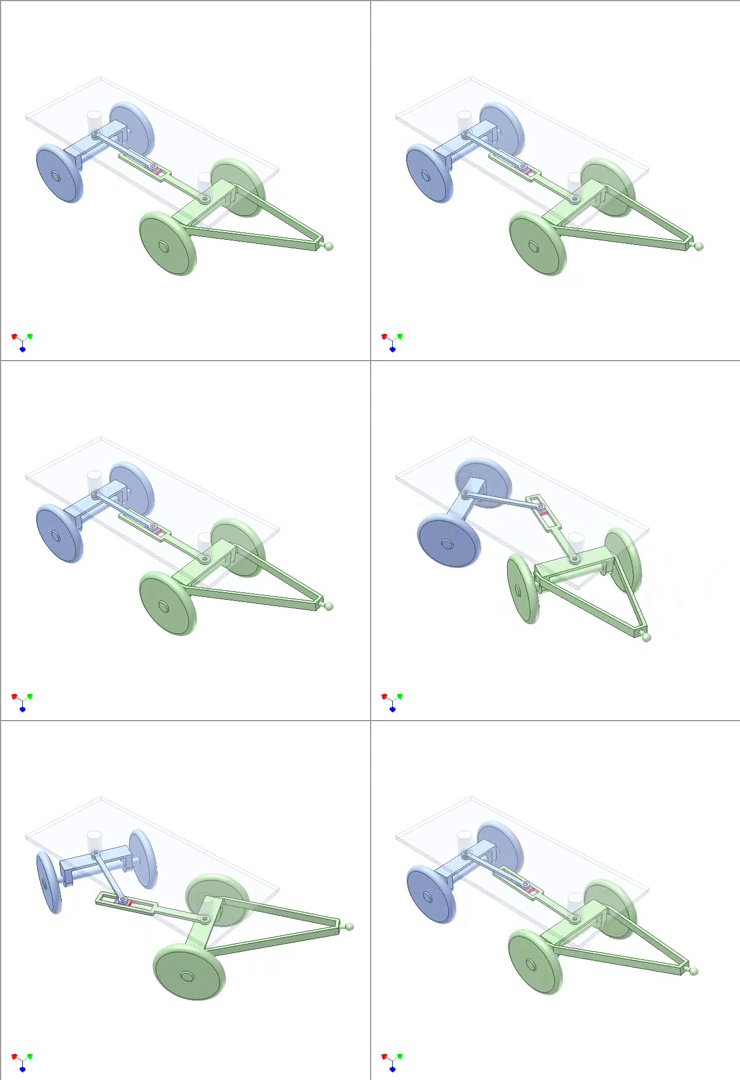
This mechanism enables a trailer (or long vehicle) to steer with both front and rear axles in harmony. Instead of dragging the rear wheels through a wide arc, a central link transfers the motion of the front axle directly to the rear, allowing the back wheels to pivot in a coordinated, opposite angle. The result is tight, confident cornering that feels almost effortless, even for long wheelbases.
Components — The front steering axle (blue), the rear pivoting axle (green), the long central tie-bar connecting them, the small offset slider running along the bar, and the supporting frame that guides the whole assembly.
How it works — When the front wheels steer, the connected linkage shifts laterally, pushing or pulling the slider along the central bar. Because that slider is pinned to the rear axle through a triangular strut, its motion forces the rear wheels to rotate in the opposite direction of the front. This counter-steering shortens the effective turning radius dramatically, reducing scrubbing and keeping the trailer aligned neatly through the curve. Everything is done through geometry: no hydraulics, no servos, no delay—just direct mechanical correspondence.
Applications — Long trailers, agricultural implements, warehouse carts, low-speed maneuvering vehicles, and specialty platforms that must turn sharply in confined spaces.
Why it matters — Coordinated rear steering reduces tire wear, improves stability, and lets long vehicles navigate areas normally off-limits. It’s a simple, durable way to turn something big without needing complex active steering systems.