
A coordinated linkage that presses a mold from above and below at the same time
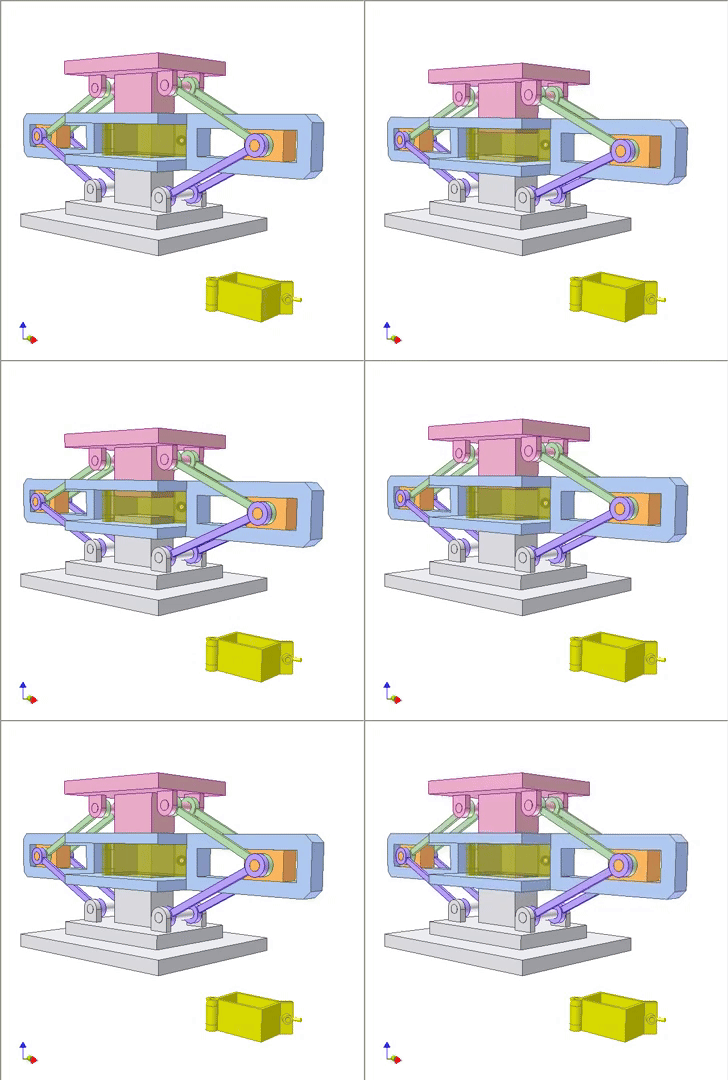
This mechanism applies synchronous compression from both the top and bottom of a mold using a pair of mirrored scissor linkages. When the outer frames move, the angled arms fold inward and draw the upper and lower platens toward the central cavity, delivering a uniform squeeze to the material inside.
Components — The system consists of a central mold block, a pink upper platen and a grey lower platen, and two blue outer frames that slide horizontally. Each side of the mechanism carries a set of angled green and purple links arranged in a scissor pattern. These links connect the sliding frames to the upper and lower platens so that all motion remains perfectly coordinated.
How it works — As the blue outer frames shift inward, the scissor arms rotate about their pivots and pull both platens toward the mold cavity. Because the linkages on the top and bottom share the same sliding input, the compression is applied symmetrically from both directions. When the frames retract, the scissor arms extend, lifting the top platen and lowering the bottom platen to open the mold and release the formed part.
Applications — Dual sided compression molds are used i