
A simple linkage that turns rotation into smooth linear travel
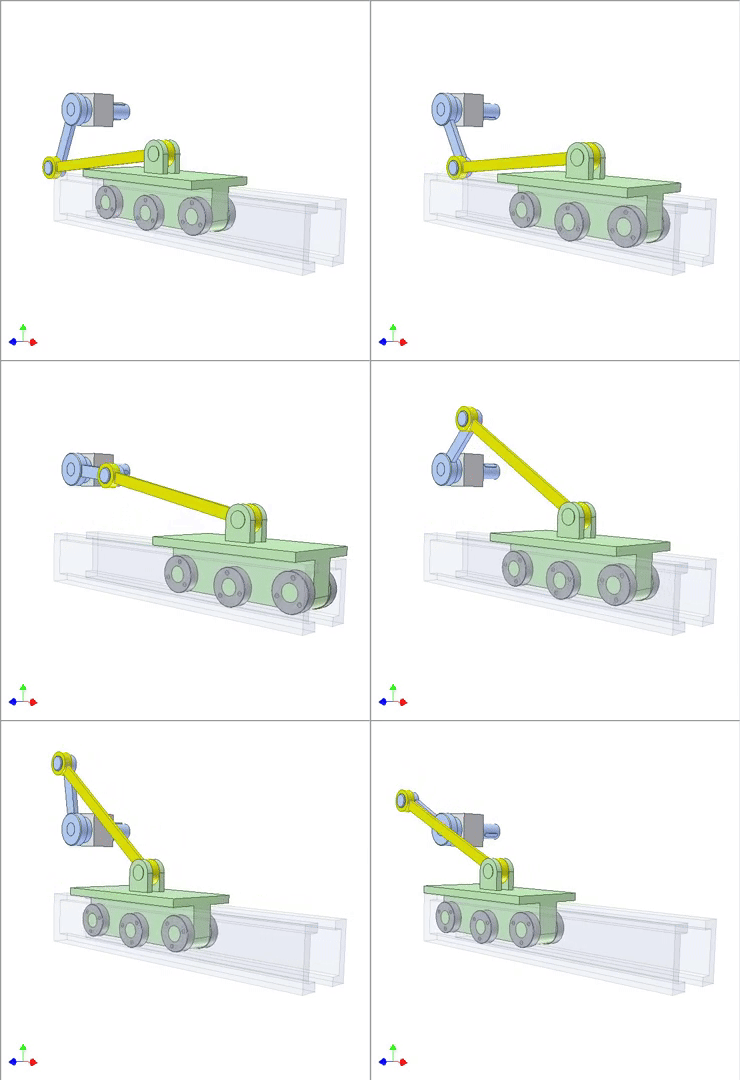
This mechanism shows a crank-driven rolling slider, where a rotating crank arm produces smooth linear motion along a track. In the animation, the slider assembly rides on a set of small wheels inside a transparent guide rail. A yellow connecting link attaches the slider to a blue crank arm, which is driven by a motor.
Components — Clearly visible parts include the blue crank arm connected to a rotating shaft, the yellow connecting link, the green slider platform, three small wheels on each side of the slider, and the transparent guide rail that constrains its motion.
How it works — As the crank rotates, the yellow link oscillates, pulling the slider forward and then pushing it back. The wheels reduce friction and allow the slider to follow the crank’s sinusoidal motion smoothly. Because the crank rotates continuously, the slider’s motion is repetitive and predictable, creating a classic reciprocating cycle.
Applications — Found in conveyors, feeders, inspection systems, reciprocating stages, and any mechanism needing controlled back-and-forth linear motion.
Why it matters — The design converts simple rotary motion into stable linear travel with minimal parts, offering reliability, smooth movement, and easy maintenance.