
A stacked-disk system that alternates rotation between two coaxial shafts
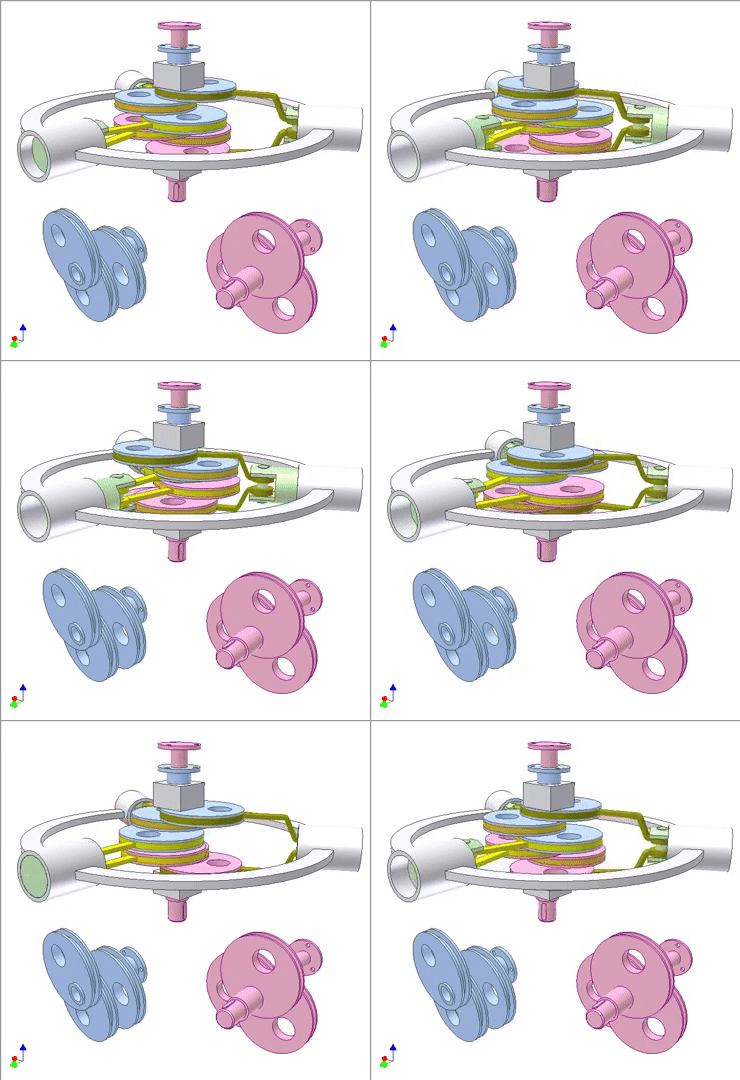
This mechanism is a neat little trick for driving two coaxial shafts from the same input. The rotating stack in the center is made of alternating blue and pink disks. They all spin together, but they don’t all connect together. The blue disks belong to one shaft; the pink ones belong to the other. Who gets power depends entirely on the yellow rocking linkage wrapped around the stack.
Components — The alternating disks (blue and pink), the central rotating shaft, the yellow forked linkage that tilts side to side, and the two output shafts—one tied to the blue set, one to the pink.
How it works — When the yellow linkage leans toward one side, it presses lightly against one disk group. That pressure is enough to create frictional coupling, so that particular set of disks “grabs” the shaft and starts driving it. Tilt the linkage the other way, and the second set takes over. It’s basically a mechanical referee deciding whose turn it is.
Applications — Coaxial propellers, dual-rotor drones, simple mechanical selectors.
Why it matters — It’s a clean, lightweight way to switch power between two concentric shafts—no electronics, no complex clutch packs.