
A single drive pin slips into each slot to create crisp intermittent steps
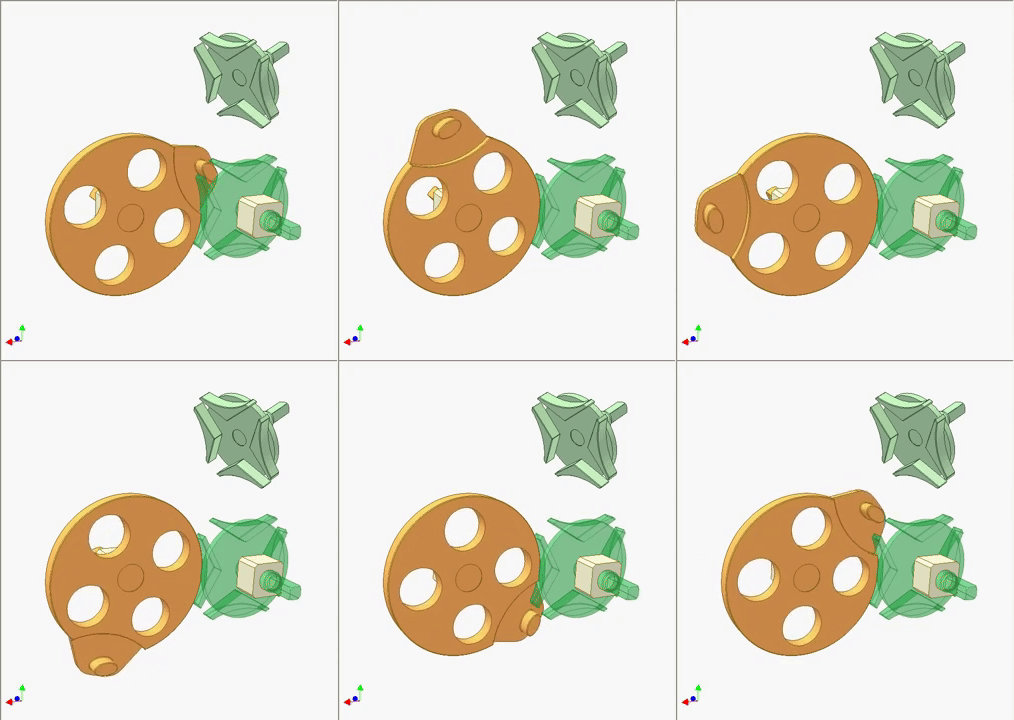
This design is the classic Geneva drive: a rotating disk carries a protruding pin that briefly enters one of the star wheel’s radial slots. During that short engagement, the star is driven through a fixed angular step, after which the pin leaves the slot and the star remains locked in place until the next pass.
Components — The orange disk is the continuously rotating driver. A flat blue pin on its rim protrudes far enough to reach the green Geneva wheel. The Geneva wheel has several evenly spaced slots cut into its circular body, each acting as an index point. A raised circular boss on the driver acts as a locking surface, holding the Geneva wheel motionless between indexing moments.
How it works — As the orange disk rotates, the drive pin approaches a slot in the Geneva wheel. The pin slips smoothly into the slot and pushes the wheel forward through a precise angular step. Once the step is completed, the pin exits the slot. At the same time, the circular boss on the driver comes into contact with the outer surface of the Geneva wheel, preventing any motion until the next pin engagement. With each full rotation of the driver, one clean indexing step occurs, yielding perfectly timed intermittent rotation.
Applications — Simple Geneva drives are widely used in film projectors, feeders, indexing tables, and any machine needing reliable intermittent motion. Their geometry guarantees consistent step size and repeatable timing.
Why it matters — The Geneva mechanism offers unmatched mechanical simplicity for creating sharply defined intermittent rotation. With only a disk, a pin, and a slotted wheel, it provides precision indexing without complicated linkages or electronics.
