
A compact linkage tucks the flap fully inside the cabinet without wasting space
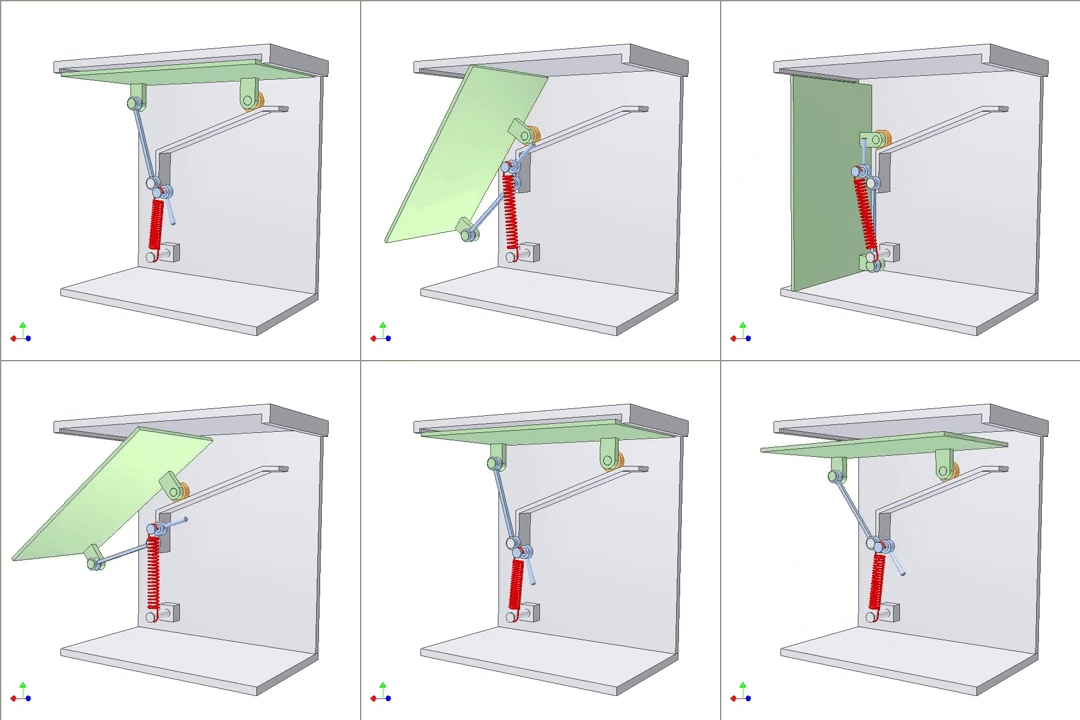
This design uses a paired lever system and a tension spring to pull a flap smoothly upward and then fold it flat inside the cabinet. The motion path is carefully shaped so the door never swings outward and never occupies extra space, giving the cabinet a clean exterior while keeping the interior fully accessible.
Components — The flap panel is the green plate hinged at two upper mounting points. A long gray linkage connects the flap to a smaller secondary arm below. A red tension spring anchors the lower arm and provides controlled lifting force. A fixed white frame supports all pivots and defines the cabinet boundaries. Together, these parts coordinate the flap’s movement through a compact, folding path.
How it works — The upper hinges guide the flap upward while the long gray link drives the lower arm inward. The spring helps bias the motion so the flap rises gently and then folds tight against the cabinet’s ceiling. As the user lifts or pushes the flap, the two arms rotate in sync, creating a compound motion that keeps the panel entirely within the cabinet’s footprint. At full travel, the flap lies flat inside, hidden from view and consuming no additional depth or height beyond the cabinet walls.
Applications — This hidden-flap layout is ideal for kitchen cabinets, appliance covers, workstation enclosures, and storage units where outward-swinging doors would interfere with walkways, countertops, or adjacent fixtures.
Why it matters — The design delivers true space efficiency: the flap opens without intruding into the room and stows without reducing usable interior volume. It creates a sleek, unobstructed exterior while maintaining full functionality, making it a smart solution for tight or high-traffic spaces.
