
A moving rack turns a gear to guide the door in a straight path
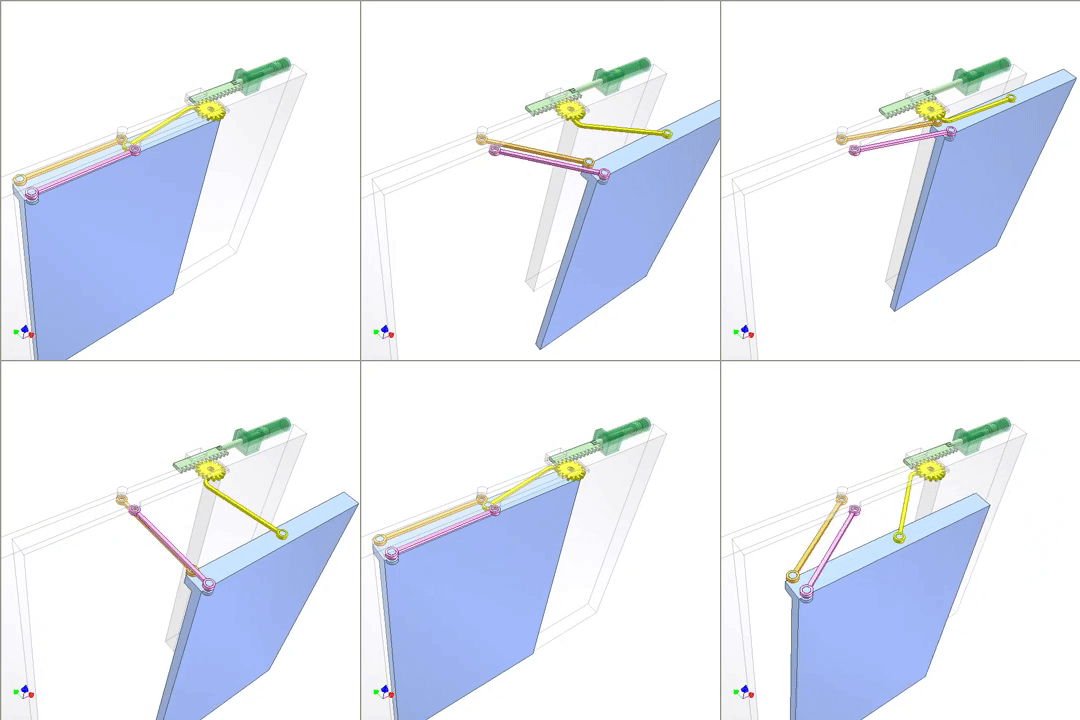
This design uses a green sliding rack to rotate a yellow pinion gear, which in turn drives a linkage that keeps the blue door panel moving in a strictly parallel path. The rack does not pull the door directly; instead, it provides rotation that the linkage converts into smooth linear travel.
Components — A long green rack slides horizontally along the frame. Its teeth mesh with a yellow pinion mounted near the top edge of the door. A light yellow link connects the pinion’s pivot to a pink arm anchored at the upper corner of the door. A matching linkage at the lower corner ensures that both corners track together, keeping the door square as it moves. The transparent frame shows the guiding rails on which the system operates.
How it works — Pushing the rack to the right rotates the yellow pinion. That rotation swings the linked arms, which pull the door sideways while holding it parallel to its original orientation. Pulling the rack in the opposite direction reverses the action and brings the door closed. Because the upper and lower linkages share the same geometry, the door maintains constant alignment throughout its travel.
Applications — Parallel sliding door drives appear in cabinets, machine enclosures, appliance doors, and any installation where the door must move sideways without tilting or jamming. They are especially useful where space is limited and smooth motion is required.
Why it matters — By converting simple rack motion into guided parallel travel, the system avoids binding, reduces wear on the rails, and ensures that seals