
Two pawls that take turns driving the wheel with each swing
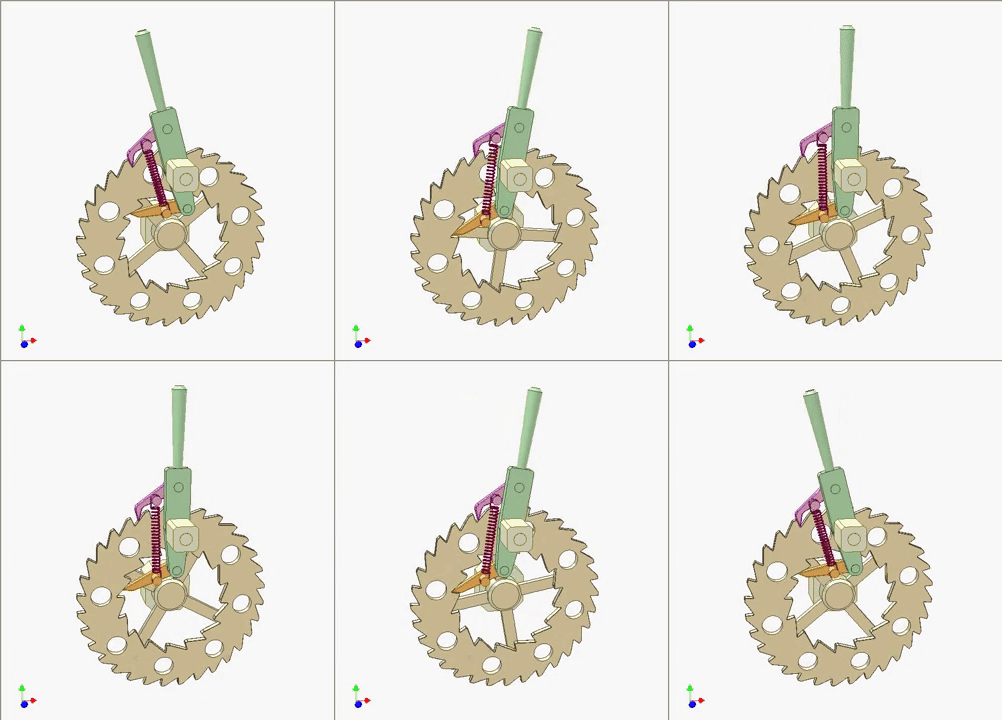
This mechanism uses two independently pivoting pawls to turn the beige ratchet wheel as the green lever swings. One pawl engages during the forward stroke while the other catches on the return, allowing the wheel to advance cleanly with every oscillation of the lever.
Components — The system includes a beige ratchet wheel with sharply cut teeth, a central hub, a long green rocking lever, an orange lower pawl fixed near the wheel, a purple upper pawl linked to the lever, and a spring that keeps the purple pawl biased toward the teeth. A compact frame holds all pivots in alignment.
How it works — When the lever swings downward, the purple upper pawl slides into a tooth gap and pushes the wheel forward. As the lever swings back up, the purple pawl lifts clear while the orange lower pawl drops in and advances the wheel by another step. Because each pawl is shaped to engage only in its intended direction, the wheel never slips backward. The alternating pattern produces a smooth stepwise rotation every time the lever rocks.
Applications — Dual pawl ratchets are used in hand tools, small indexing devices, feed mechanisms, and situations where a bidirectional input must produce continuous one way rotation.
Why it matters — With two pawls sharing the work, the mechanism handles oscillating input efficiently and without backlash. It shows how careful pawl geometry and spring preload allow a simple rocking motion to become a reliable, continuous drive.
