
Two different mechanisms producing the same smooth oscillation
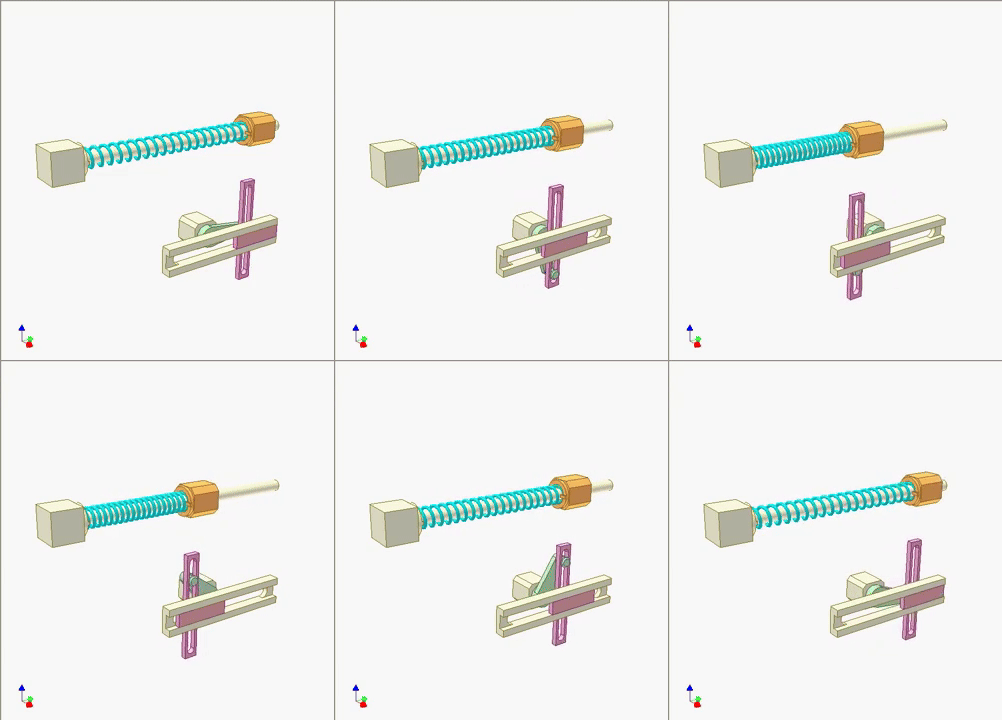
This mechanism demonstrates two independent ways to produce harmonic motion: one using a simple spring mass system, and the other using a guided linkage that forces the slider into the same sinusoidal pattern. Although the structures differ, both outputs trace nearly identical smooth oscillations.
Components — The upper assembly consists of a teal compression spring between two end blocks, with the right orange block free to slide and oscillate. The lower assembly features a rectangular slider driven by a pink vertical bar inside a slotted cream frame. A small cranklike guide controls the motion of the pink bar to recreate harmonic travel.
How it works — In the spring based system, the orange block moves back and forth as the spring stores and releases energy, naturally following a harmonic curve. In the linkage based system, the pink bar rotates or pivots in such a way that its tip forces the slider to move with the same timing and amplitude profile. The geometry of the slot and the rotary motion of the bar impose a sinusoidal displacement, mechanically mimicking the spring’s behavior without relying on elasticity.
Applications — Harmonic linkages appear in engine valve drives, oscillating feeders, precise measuring tools, drafting machines, and mechanical simulators. Spring mass oscillators are found in countless s
