
A chain of linked gears transforms a short input stroke into a much larger output sweep.
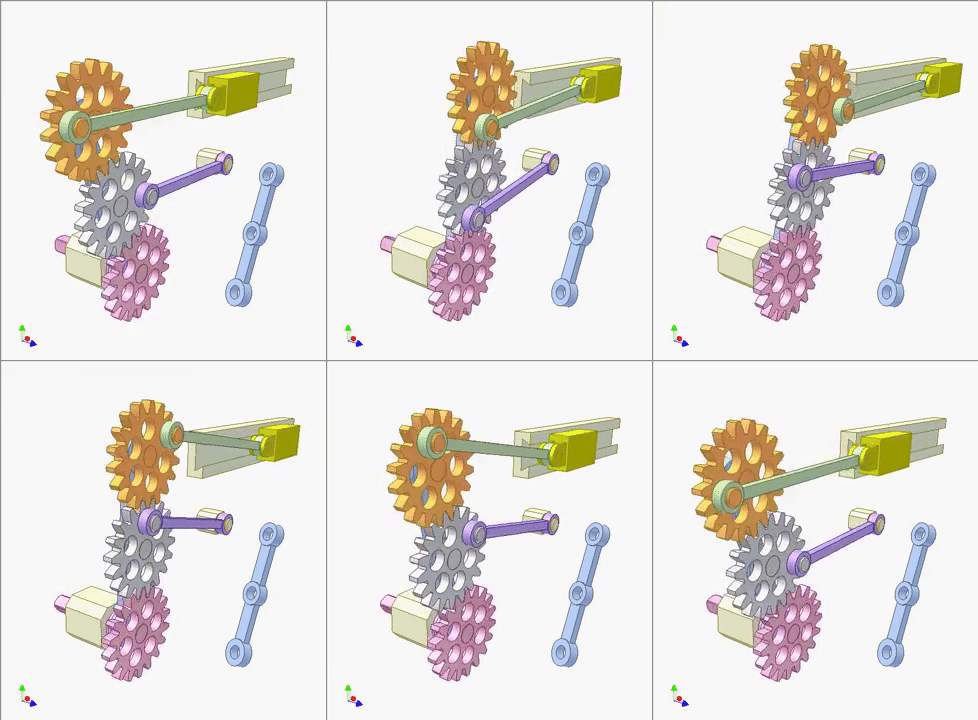
This mechanism uses a cascading chain of gears and linkages to amplify linear motion. A short stroke on the yellow slider drives the first gear, which transfers and enlarges the movement through two additional gear¨Clink pairs before delivering a multiplied arc at the output arm.
Components — Yellow slider and link, orange first gear, silver middle gear, pink lower gear, purple connecting rod, blue final output link, and gear shafts with supporting blocks.
How it works — The slider pushes the yellow link, rotating the first gear by a small angle. This rotation is passed to the middle and lower gears, each contributing to the cumulative angular gain. The final rod attached to the last gear converts this amplified rotation back into a broad swinging output.
Applications — Motion amplifiers, mechanical indicators, small-input control levers, measurement instruments, and systems needing large output travel from compact actuation.
Why it matters — By stacking gears with appropriate ratios, the design multiplies movement without adding complex cams or hydraulics. It offers predictable amplification with minimal backlash, making it valuable where space is tight but a long travel or wide swing is required.