
A swinging anchor releases the gear one tooth at a time, turning steady force into controlled, rhythmic motion.
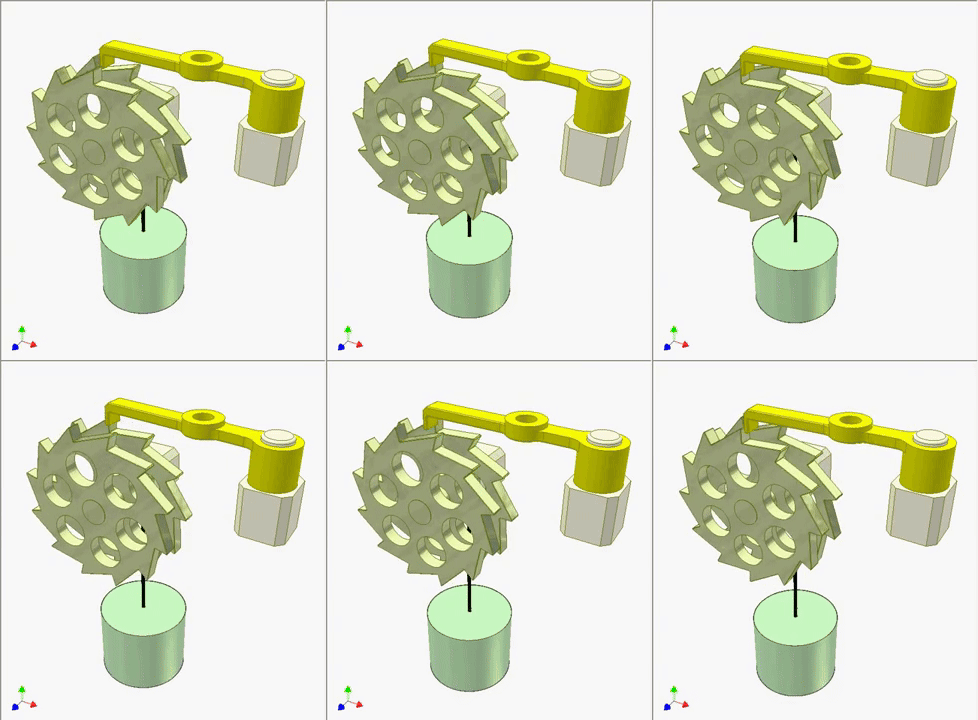
This mechanism is a classic anchor-style escapement, where the oscillation of a lever regulates the release of a toothed wheel. The interaction between the pallet faces and the angular gear converts continuous torque into carefully spaced steps.
Components — Yellow anchor lever, dual pallet faces, escape wheel with pointed teeth, central pivot post, and the driven cylindrical shaft underneath.
How it works — The escape wheel pushes against one pallet, holding its rotation. When the anchor swings, that pallet disengages while the opposite pallet catches the next tooth. This alternating lock-and-release lets the wheel advance one step per swing, producing evenly paced rotation.
Applications — Clocks, timing devices, mechanical regulators, metering systems, and any mechanism needing controlled, repeatable stepping.
Why it matters — The escapement transforms continuous stored energy into rhythmic increments, maintaining timing accuracy without electronics. Its geometry defines the cadence and stability of many classical machines, making it a foundational element of mechanical timekeeping and motion control.
