
A downward-triggered mechanism that advances a slider one tooth at a time
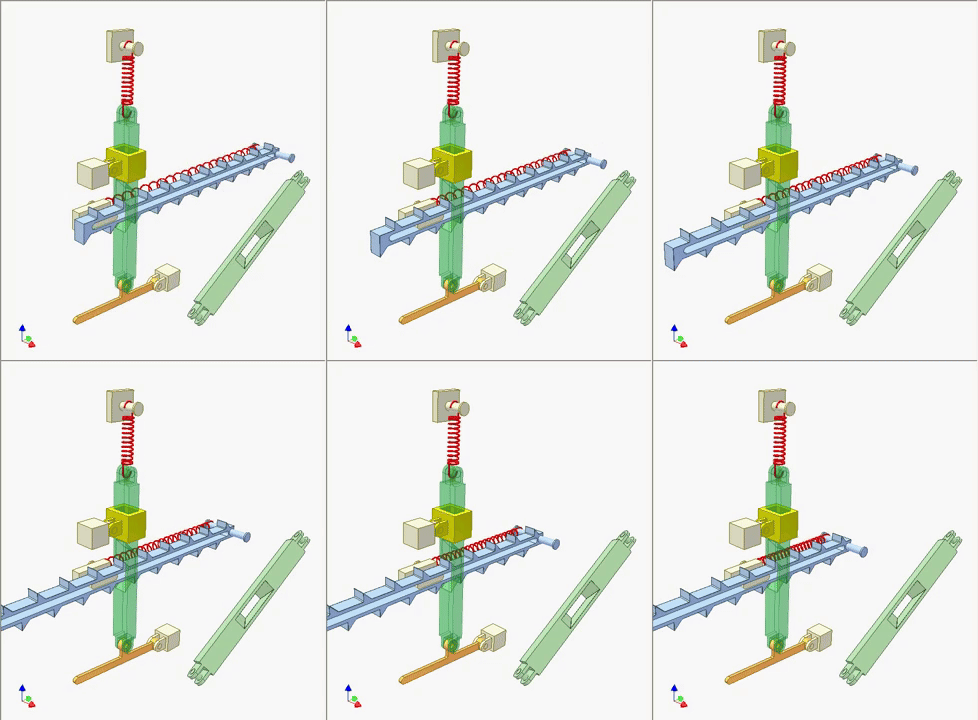
This mechanism converts a downward pull into a single incremental movement along a toothed rack. The green slider travels beside the rack and is held in place by a spring-biased latch. When the orange lever is pulled, it forces the slider downward, allowing the latch to slip past one tooth. As soon as the slider clears that tooth, the latch snaps back in to stop further motion. Releasing the lever resets the linkage so the next pull advances the slider by exactly one more step.
Components — The green sliding block, the blue toothed rack, the orange pull lever, the yellow latch block, and the red compression spring that re-engages the latch.
How it works — Pulling the lever drags the slider downward until the latch rides over the next tooth and drops into position, locking the slider immediately. Releasing the lever resets the linkage, preparing it for the next pull. Each actuation moves the slider forward by exactly one tooth.
Applications — Manual indexing slides, ratcheting feed mechanisms, stepwise adjusters, calibration tools, and devices that require controlled one-step-per-action motion.
Why it matters — One pull equals one precise increment. The mechanism prevents overshoot and provides consistent, repeatable linear steps with clear tactile feedback.
