
A spring-biased linkage that closes three rollers around a rotating workpiece for steady support
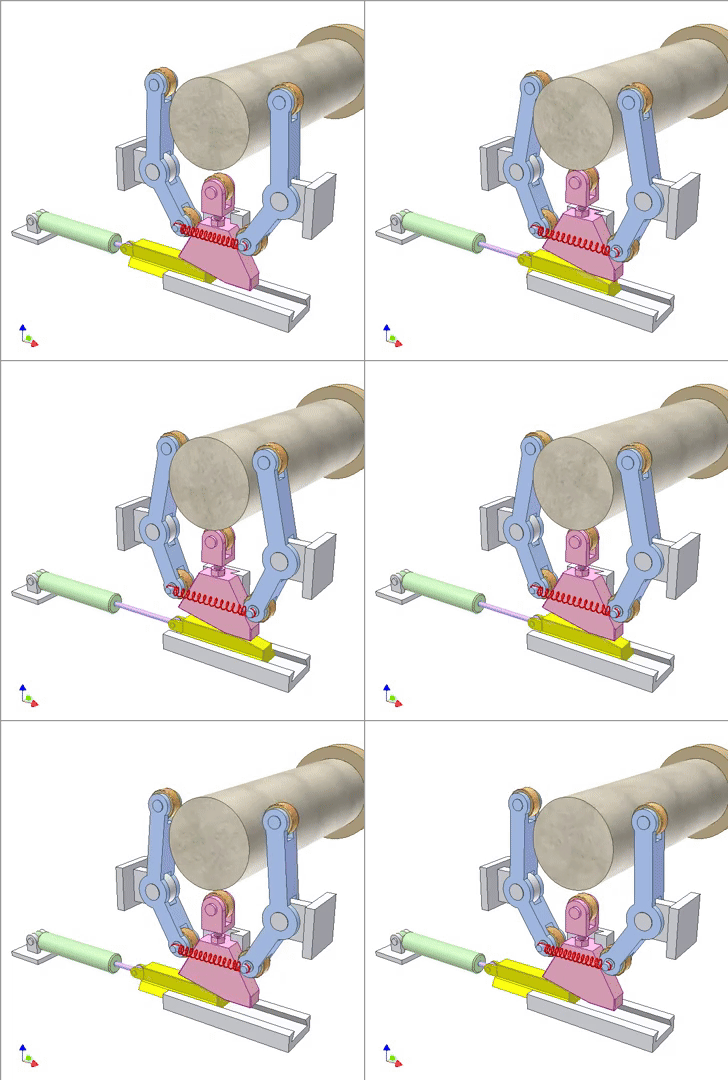
This mechanism uses a coordinated three-link system and a central spring to draw three rollers evenly toward a cylindrical workpiece. Each roller sits at the end of a short arm, and those arms are tied together through a central block driven by a sliding input. When the actuator pulls the slider, the spring compresses and the three arms swing inward in symmetry. The rollers lightly grip the cylinder from three sides, centering it and damping vibration while still allowing it to rotate freely.
Components — Three roller arms, the pink central block with a compression spring, the yellow sliding input block, the guide rails, and the green actuator that applies the closing force.
How it works — Pulling the slider compresses the spring and draws the central block downward, causing the roller arms to pivot inward together. Because the linkage is symmetric, all three rollers contact the cylinder with equal light pressure. Releasing the slider lets the spring open the arms for quick loading.
Applications — Steady rests for lathes, rod-feeding systems, polishing and grinding supports, rotating inspection guides, and vibration control for long cylindrical parts.
Why it matters — The mechanism centers the work automatically and maintains uniform support without rigid clamping, stabilizing the part while preserving smooth rotation. This improves machining accuracy, surface quality, and process reliability.