
A pair of offset links turn one input into two opposite outputs
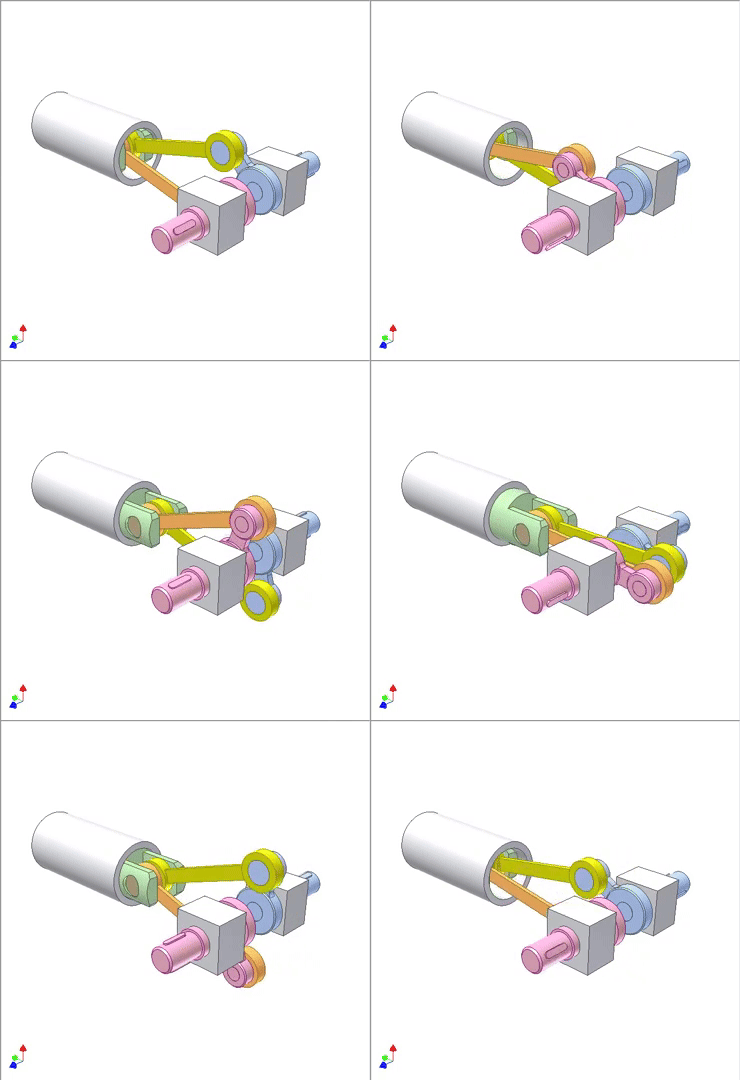
This mechanism uses a pair of angled bars to produce opposite-direction rotation from a single oscillating input. In the animation, a yellow crank link connected to the main cylinder swings back and forth. That motion is transferred to two separate bar linkages—one orange and one pink—each connected to its own output shaft.
Components — The model includes the oscillating yellow crank, two bar links (orange and pink), the two output shafts arranged side by side, the two gray support housings, and the main cylindrical body containing the drive.
How it works — As the yellow crank swings, it pushes the two side bars in opposite directions because they attach at different angles. The orange bar drives its shaft forward while the pink bar drives the other shaft backward. When the crank reverses, the outputs reverse as well—but always in opposite directions relative to each other. This makes it a simple, lightweight way to create mirrored rotational outputs without gears.
Applications — Reversing drives, synchronized mechanical motions, small actuators, and directional selectors.
Why it matters — The design provides opposite rotation using nothing more than geometry—no gears, no clutches, just pure linkage motion.
